


The role of a company secretary forms the cornerstone of robust corporate governance, as it ensures that a company strictly adheres to its legal and ethical obligations. Moreover, the company secretary duties and responsibilities act as the critical link between the board of directors, management, and shareholders. In practice, the secretary manages everything from crucial ASIC filings to the meticulous documentation of board meetings.
Therefore, this guide explores the essential company secretary duties and responsibilities, positioning the role not as a mere administrator but instead as a strategic guardian of corporate integrity.
Beyond Administration: The Modern Company Secretary
Forget the outdated image of a simple note-taker. Instead, the modern company secretary serves as a strategic linchpin in Australian corporate governance. They act as the organisation’s chief administrative officer while leading as its primary compliance expert. Furthermore, their expertise proves indispensable in navigating Australia’s complex and constantly evolving regulatory landscape.

This guide reframes the company secretary as a proactive leader whose contributions fundamentally drive a company’s success and resilience. In addition, we will delve into the core pillars of their duties and clearly demonstrate why this position remains essential for any ambitious Australian company.
Key Pillars of the Company Secretary Role
The responsibilities of a company secretary rest on three foundational pillars that work together to protect the company and empower its leadership. Therefore, understanding these pillars becomes the first step in appreciating the immense value of the role.
Corporate Governance: As guardians of the company’s governance framework, company secretaries actively provide expert advice to the board on legal and ethical duties. Consequently, they ensure that every action remains compliant and defensible.
Statutory Compliance: They take responsibility for meeting every legal requirement under legislation such as the Corporations Act 2001. In practice, this includes managing all necessary filings with regulatory bodies like ASIC.
Board and Shareholder Relations: They serve as the central communication hub and facilitate a transparent, efficient flow of information between the board, management, and shareholders.
Moreover, this shift toward a strategic function stems from increasing regulatory scrutiny. For example, the expansion of frameworks like the Financial Accountability Regime (FAR) has amplified responsibilities and demanded more sophisticated data management and reporting.
Ultimately, a company secretary upholds the organisation’s integrity while providing sound advice on critical board decisions, which makes them a key player in strategic success. For leaders managing complex business structures, connecting these duties with financial obligations proves vital. To explore this connection further, you can read our guide on common questions about business tax.
Ready to explore these duties in more detail? Let’s dive in.
Mastering Core Compliance and Statutory Duties
At the core of a company secretary’s function lies the non-negotiable mission of ensuring the business operates entirely within the bounds of the law. In this capacity, they act as the organisation’s compliance guardian and meticulously manage all statutory duties to maintain good standing with regulators such as ASIC.
Importantly, this responsibility extends far beyond simple administration. Instead, it focuses on constructing a resilient foundation of legal integrity that enables the business to operate with confidence. One of the most fundamental duties involves maintaining the company’s statutory registers—a task in which precision remains absolutely paramount.
The Bedrock of Compliance: Statutory Registers
Statutory registers do not function as mere historical archives; instead, the Corporations Act 2001 legally mandates them to remain flawlessly accurate and up to date. Consequently, they serve as the official and undisputed source of truth regarding the company’s structure and ownership.
Register of Members: This register provides the definitive record of company ownership by tracking every shareholder and the exact details of their holdings.
Register of Directors and Secretaries: This log records all current and past officeholders, including their appointment and cessation dates, thereby creating a complete history of corporate leadership.
Register of Charges: This register documents any security interests the company has granted over its assets, such as loans secured against property or equipment.
In addition, these registers integrate deeply into the company’s broader governance and directly inform board activities as well as strategic decisions.
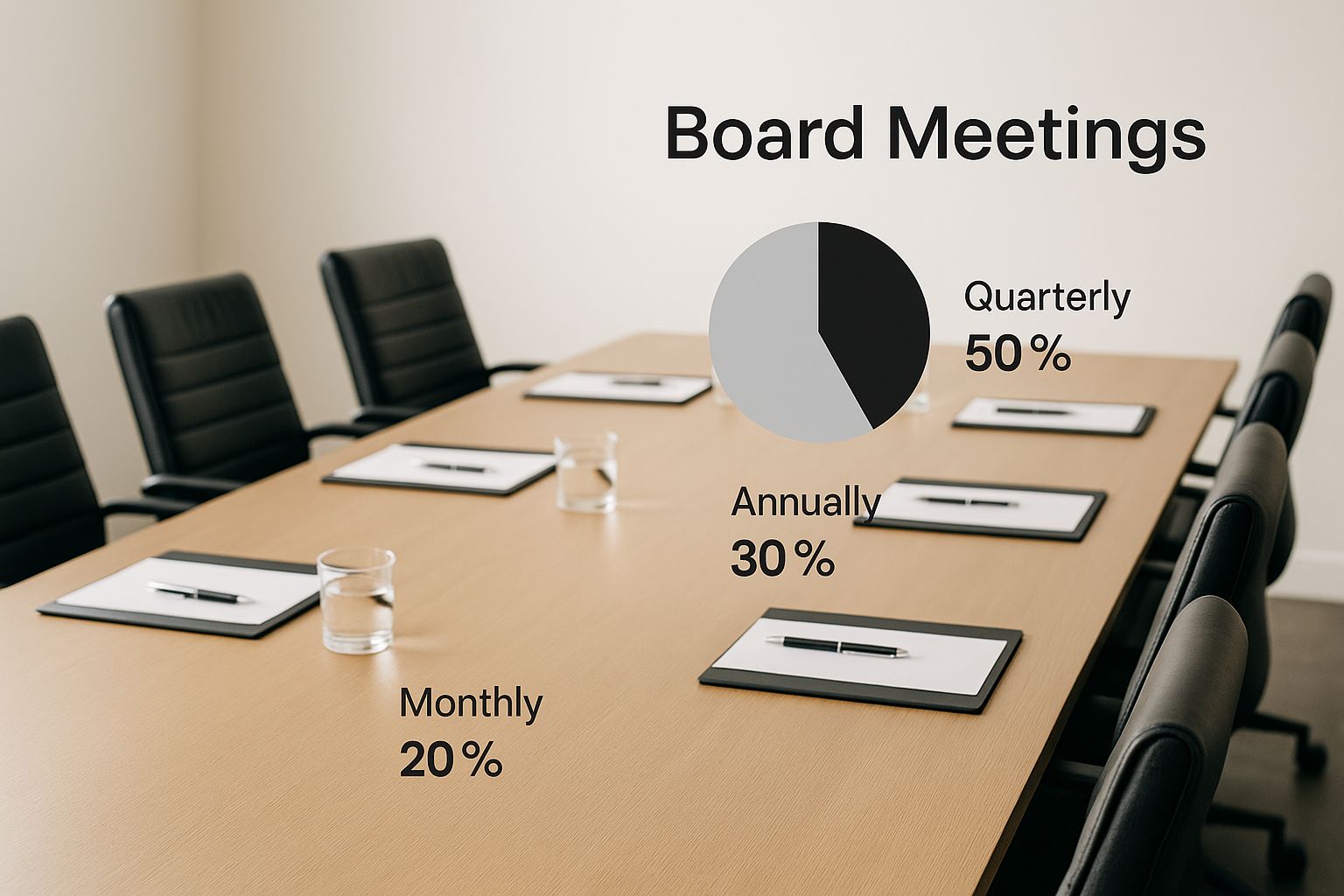
As you can see, these compliance duties are not performed in a vacuum. They are central to the board’s ability to function effectively and make informed decisions.
Navigating ASIC Filings and Deadlines
Beyond maintaining pristine internal records, the company secretary also acts as the primary liaison with the Australian Securities and Investments Commission (ASIC). In this role, they manage a continuous flow of statutory filings to ensure the public record consistently and accurately reflects the company’s current status.
Practical Example: When a company appoints a new director, the company secretary must promptly lodge a Form 484 with ASIC to notify them of the change. Moreover, this filing must occur within the strict 28-day deadline. If the secretary misses this timeframe, the company automatically incurs late fees and risks being flagged for non-compliance.
Therefore, these deadlines remain absolute and highlight the rigor of Australia’s regulatory environment.
Key Takeaway: Meeting statutory deadlines is not optional. Late lodgements trigger escalating financial penalties and can place your company under ASIC’s scrutiny, potentially leading to audits or further investigation.
Staying organised is essential for survival. To manage this intricate web of dates and forms, many company secretaries leverage the top compliance management solutions for your business. These platforms are invaluable for automating reminders and streamlining the filing process.
Here’s a snapshot of key deadlines you cannot afford to miss.
Key ASIC Filing Deadlines for Company Secretaries
This table summarises some of the most common statutory lodgements company secretaries must handle. Missing these dates can lead to significant penalties, so it’s crucial to have a system in place to manage them effectively.
| Filing Type | Purpose | Statutory Deadline |
|---|---|---|
| Annual Company Statement | Confirms company details are current on the public register. | Within 2 months of the annual review date. |
| Change of Company Details (Form 484) | Notifies ASIC of changes to directors, addresses, or share structures. | Within 28 days of the change. |
| Financial Reports (for certain companies) | Lodges annual financial statements for public transparency. | Within 3 or 4 months of the financial year-end. |
| Appointment/Cessation of Officeholder | Updates the public record of who is legally responsible for the company. | Within 28 days of the appointment or cessation. |
Vigilant oversight of these dates is a non-negotiable aspect of the role.
The consequences of non-compliance extend beyond financial penalties. Persistent failures can severely damage a company’s reputation and, in some cases, may lead to directors being held personally liable for breaches. This is why a thorough understanding of regulatory checks, including how to handle events like https://www.endurego.com.au/understanding-tax-audits-in-australia/, is so important for business leaders.
By diligently managing these core duties, the company secretary shields the company from legal and financial risk, providing the board and management the assurance they need to focus on strategic growth.
Becoming the Board’s Strategic Governance Partner
A truly effective company secretary goes beyond compliance tasks and actively serves as a strategic partner to the board of directors. Their real value emerges when they transform routine administrative functions into a robust governance framework that supports intelligent and defensible decision-making.
In fact, this marks the evolution from administrator to trusted advisor. The company secretary shapes the board’s operational cadence by ensuring every meeting, discussion, and decision remains productive, purposeful, and perfectly aligned with the company’s constitution.
Orchestrating Effective Board Meetings
Productive board meetings never happen by accident; instead, company secretaries meticulously orchestrate them. A key component of company secretary duties and responsibilities involves managing the entire process to transform potential chaos into focused, strategic dialogue. This responsibility includes several critical steps.
Crafting Strategic Agendas: In collaboration with the Chair and CEO, the company secretary actively prioritises agenda items so meetings focus on high-level strategy rather than becoming bogged down in operational details.
Distributing Insightful Board Papers: They compile and distribute board packs in advance, ensuring the papers remain clear, concise, and insightful. As a result, directors arrive well-prepared to contribute meaningfully to discussions.
Adhering to the Corporate Constitution: During meetings, they act as the procedural expert and ensure that discussions and voting processes strictly follow the company’s internal rules.
Furthermore, this foundational work sets the stage for board success. Good governance is not theoretical; research confirms that such oversight directly enhances both the transparency and the quality of board decisions. In fact, studies indicate that over 80% of Australian organisations now regard the company secretary as a primary guardian of governance, which highlights their growing influence in shaping corporate integrity. To learn more, you can also explore our insights on the evolving roles of company secretaries.
The Art of Defensible Minute-Taking
Minute-taking goes far beyond simple transcription; instead, it creates a legal record that carries significant weight. These documents play a crucial role in protecting the company and its directors because they provide clear, auditable evidence of the board’s decision-making process. Moreover, well-crafted minutes demonstrate that directors have diligently fulfilled their fiduciary duties.
Practical Example: A board resolves to approve a major capital expenditure. The minutes should not just state “The expenditure was approved.” Instead, they must capture that the board reviewed the business case, considered the financial risks, and concluded that the investment was in the company’s best interests. This detail is what makes the decision defensible later.
Effective minutes must clearly articulate what the board decided, who holds accountability for subsequent actions, and the deadlines for completing those actions. As a result, they establish a transparent chain of accountability and ensure the board’s directives are fully implemented.
Minutes are a cornerstone of the corporate record, and their accuracy is non-negotiable. For directors, understanding their own obligations is equally critical; our article explores the safest way to resign as a director when circumstances change. By mastering these governance functions, the company secretary becomes an indispensable partner, enabling the board to lead with confidence and clarity.
Safeguarding Corporate Records and Communications
A company secretary serves as the chief architect of a company’s integrity, actively building and protecting a permanent, auditable history of its most critical decisions and corporate structure. This role is therefore defined by meticulous record-keeping.
Moreover, this responsibility extends far beyond simple filing. The company secretary acts as the official custodian of the company’s statutory books. These records are not static documents; rather, they function as dynamic legal instruments that must be maintained with absolute accuracy to ensure full compliance with the Corporations Act 2001.

These books represent the company’s official biography, capturing everything from meeting minutes and resolutions to registers of directors and shareholders. In fact, even minor inaccuracies can create significant legal and financial risks, which makes precision absolutely essential.
Maintaining the Corporate Memory
The company secretary’s duty is to ensure this corporate memory is complete, secure, and accessible for inspection by authorised parties like directors or auditors. This custodial responsibility is the bedrock of transparent governance. A key component of this involves establishing and enforcing robust email record retention policies to satisfy both legal and internal requirements.
Key duties in this domain include:
Custody of the Common Seal: The company secretary manages the safe custody and proper use of the company seal, ensuring it is only affixed to documents after board authorisation.
Managing the Registered Office: They maintain the company’s registered office and ensure that all official correspondence is promptly addressed. Since this is the company’s legal address, no communication can be overlooked.
Executing Formal Documents: The company secretary frequently witnesses the signing of contracts and other formal agreements, verifying that they have been executed in accordance with the company’s constitution and relevant board resolutions.
Managing Shareholder Communications
Beyond maintaining internal records, the company secretary also acts as the primary channel for all official shareholder communications. In this role, they strike a delicate balance between strict legal compliance and effective stakeholder engagement, thereby ensuring that all company owners remain fully informed.
Practical Example: For an Annual General Meeting (AGM), the company secretary drafts the Notice of Meeting, ensuring it includes all legally required information, such as the full text of resolutions and proxy voting instructions. They are then responsible for distributing this notice to every shareholder within the statutory timeframe—typically 28 days for a listed company.
This process also includes managing the share registry. In practice, this requires processing share transfers, updating ownership changes, and promptly handling shareholder inquiries. Moreover, every action must be meticulously documented to preserve the integrity of the company’s ownership records. Such diligent management forms a fundamental part of company secretary duties and responsibilities, as it protects the organisation from disputes and regulatory scrutiny.
Need help ensuring your company’s records and ASIC obligations are flawlessly managed? As registered ASIC agents, we deliver comprehensive company secretarial services that keep your business compliant and stress-free. Book a consultation today and secure your peace of mind.
Expanding Your Influence into Risk and Strategy
The role of a company secretary has evolved far beyond administrative management and meeting scheduling. Today, a high-performing company secretary operates as a strategic powerhouse, serving as the organisation’s forward-thinking advisor on risk, compliance, and ethics.
This evolution represents a significant shift in influence. Instead of merely documenting decisions, the modern company secretary now plays an active role in shaping them. In fact, they operate on the front line by helping to identify and mitigate organisational risks before these escalate into significant threats. Ultimately, this responsibility extends beyond compliance for its own sake; it directly contributes to the company’s long-term resilience and success.
From Compliance Officer to Risk Advisor
A pivotal evolution in a company secretary’s duties and responsibilities is their expanding role in enterprise risk management. This shift requires them to move beyond baseline compliance and proactively assist the board in identifying both emerging threats and potential opportunities.
This advisory function plays a critical role. The company secretary often maintains the company’s risk register and ensures it remains a dynamic document that actively tracks operational, financial, and regulatory threats. Rather than treating it as a static file, they position it as a strategic tool that enables the board to make fully informed decisions.
Key areas of risk management include:
Workplace Health and Safety (WHS): The company secretary advises the board on compliance with WHS legislation, thereby ensuring a safe work environment and protecting directors from personal liability for breaches.
Privacy and Data Protection: With legislation such as the Privacy Act 1988 imposing stricter obligations, it guides the board in developing robust data-handling policies that help prevent substantial fines and reputational damage.
Conflicts of Interest: Acting as an independent voice, they help directors navigate potential conflicts of interest, ensuring every board decision is made with the highest level of integrity.
Navigating ASX and ATO Requirements
For companies listed on the Australian Securities Exchange (ASX), the company secretary’s strategic importance increases significantly. They act as the designated officer responsible for ensuring strict adherence to the ASX Listing Rules—a complex framework of regulations designed to uphold market fairness and transparency.
In addition, this role carries the immense responsibility of managing the company’s continuous disclosure obligations. In practice, the company secretary must ensure that any information capable of materially affecting the company’s share price is immediately disclosed to the market.
Practical Example: A listed biotech company achieves a breakthrough in a clinical trial. The company secretary must immediately work with the CEO and board to draft and release an ASX announcement detailing the results. A delay in disclosing such price-sensitive information could lead to severe penalties from ASIC and irrevocably damage investor confidence.
Their oversight also extends into financial governance and tax compliance. In particular, understanding tax legislation proves crucial, as the Australian Taxation Office (ATO) sets out strict rules governing corporate record-keeping. You can review the legislative basis for record-keeping directly on the ATO’s website, which outlines these stringent requirements.
By mastering these complex domains, the company secretary moves far beyond the traditional administrative role and becomes an indispensable advisor. They not only ensure compliance but also actively guide the company toward sustainable, strategic success.
Is your business trying to navigate complex risk and compliance challenges? Our expert team provides ASIC agent and advisory services to help you manage your obligations with confidence. Contact EndureGo Tax today for a strategic consultation.
Your Company Secretary Questions Answered
Navigating the regulations around the company secretary role can feel challenging, especially while managing the daily demands of a business. To help, here are clear, expert answers to some of the most common questions.
Does Every Australian Company Need a Company Secretary?
Not necessarily—this is a common source of confusion.
Under the Corporations Act 2001, all public companies (those with “Ltd” in their name) must legally appoint at least one company secretary who resides in Australia. This is a non-negotiable legal mandate.
However, proprietary companies (“Pty Ltd”) are not required to appoint one. Still, many private companies choose to do so in order to maintain strong governance and clearly separate director and administrative duties. If a proprietary company does not appoint a secretary, its directors remain legally responsible for carrying out all associated duties.
Can a Director Also Be the Company Secretary?
Yes—this is a very common and practical arrangement in small and medium-sized enterprises. Having a director serve concurrently as the company secretary can streamline both communication and administration.
However, the individual must fully understand the distinct legal duties of each role. Importantly, a company’s sole director cannot also serve as its sole company secretary. This safeguard ensures a minimum level of internal oversight.
Key Insight: While combining roles is efficient, it also concentrates significant legal responsibility on one person. They must therefore be thoroughly familiar with all company secretary duties and responsibilities to avoid inadvertent breaches of the Corporations Act.
What Are the Penalties for Failing to Perform These Duties?
The consequences of non-compliance are severe and can impact both the company and its officers personally. For example, missing a statutory deadline—such as lodging changes with ASIC within the 28-day window—triggers automatic and escalating late fees.
More significantly, as a company officer, a company secretary is subject to the same general duties as a director. Breaches can lead to substantial personal penalties from ASIC. In serious cases, the repercussions may include:
Financial Penalties: Fines reaching hundreds of thousands of dollars for individuals.
Disqualification: Courts may prohibit an individual from managing any company for a specified period.
Imprisonment: For severe breaches involving dishonesty or recklessness, criminal charges can result in jail time.
Where Can I Find the Official Legislation for These Duties?
The primary source of legislation is the Corporations Act 2001 (Cth). This extensive act outlines the duties for all company officers, including directors and secretaries. The full text is available on the Australian Government’s Federal Register of Legislation.
For listed companies, the ASX Listing Rules are also mandatory. However, for tailored advice specific to your business, consulting with a qualified professional is always the most prudent course of action.
Managing corporate compliance can be a significant burden. As registered ASIC agents, EndureGo Tax offers comprehensive company secretarial services to ensure your business remains compliant, allowing you to focus on growth. Book a consultation today by visiting https://www.endurego.com.au.
