


That letter from the tax office has landed, and your heart skips a beat. An audit by the ATO. It’s a phrase that can sound intimidating, but with expert guidance, it becomes a manageable process designed to keep Australia’s tax system fair for everyone.
Think of it as a formal check-up on your financial affairs to make sure you’ve paid the right amount of tax. Understanding what’s involved is the first step to taking control and navigating the process smoothly.
What an Audit by the ATO Really Means
An ATO audit isn't just a quick glance; it's a deep dive into your tax returns and financial records. The Australian Taxation Office uses these examinations to uphold the integrity of our tax and superannuation systems, ensuring everyone pays their fair share. It’s their way of spotting discrepancies and making sure the rules are followed across the board.

Many people use the terms "review" and "audit" interchangeably, but they are worlds apart in scope and intensity. A review is like a quick check of your car's oil and tyre pressure. A full audit? That’s more like a specialist mechanic stripping down the engine to inspect every single part.
The Difference Between a Review and an Audit
Knowing what level of scrutiny you’re facing is key. The ATO tailors its approach based on the complexity of the issue and the perceived risk.
- ATO Review: This is usually the first step and is much less intense. It typically focuses on one or two specific claims in your tax return. For instance, the ATO might just want to see the receipts for a large work-related car expense you claimed. It’s less formal and often resolved quickly.
- ATO Full Audit: An audit is the real deal. It’s a comprehensive, top-to-bottom investigation into your finances that can stretch back over several years. The ATO will comb through a huge range of documents—bank statements, invoices, business records, and even data from other sources.
To put it into perspective, a simple review might question a $3,000 home office deduction. A full audit on a sole trader, on the other hand, could involve examining every dollar of business income, scrutinising every single expense, checking BAS lodgements, and even comparing their declared earnings to their lifestyle.
Before we go further, let's break down the key differences in a simple table. This will help you quickly identify what kind of notice you might have received.
ATO Review vs Full Audit At a Glance
| Aspect | ATO Review | ATO Full Audit |
|---|---|---|
| Scope | Narrow, often focused on a single claim or specific area. | Broad and comprehensive, covering multiple years and financial areas. |
| Intensity | Low. Usually a request for specific documents or clarification. | High. A detailed and thorough investigation of all records. |
| Timeline | Typically resolved within a few weeks. | Can take several months, sometimes even years. |
| Communication | Often handled via mail or phone with a request for information. | Formal, involving case officers, interviews, and official notices. |
| Outcome | Minor adjustment to your tax return or a 'no change' result. | Can lead to significant tax adjustments, penalties, and interest charges. |
As you can see, the difference is significant. One is a polite query, the other is a full-scale examination.
An audit is a formal process governed by legislation, such as the Taxation Administration Act 1953, which gives the Commissioner powers to access information and premises.
Ultimately, the goal is always the same: to verify that the information you've reported is accurate and complete. While a notice for an audit by the ATO can definitely cause some stress, the key is to see it as a structured process you can manage. With the right preparation and professional guidance, you can get through it confidently.
Actionable Tip: If you've received a notice, don't face it alone. Book a consultation with our expert tax accountants in Ashfield or Belrose Northern Beaches today. We'll assess the notice and build your defence strategy immediately.
What Catches the ATO's Eye? Common Triggers for an Audit
Receiving that audit letter from the ATO rarely happens by chance. It’s not a random lottery. The Australian Taxation Office uses incredibly powerful data-matching technology and risk-assessment algorithms to flag tax returns that just don't add up.
Think of it as a sophisticated digital watchdog. It cross-references billions of pieces of information from banks, employers, Centrelink, and even private businesses to spot inconsistencies. When the story you tell in your tax return doesn’t match the data they have on file, a red flag goes up. That’s often what kicks off a review or a full-blown audit.
Data Mismatches and Discrepancies
One of the fastest ways to get the ATO’s attention is lodging a return where the numbers don't align with information they've received from other sources. Their systems are built to catch these variances almost instantly.
Practical Example: You work as a contractor and receive $80,000 from a company, which they report to the ATO. However, you only declare $70,000 in your tax return, forgetting about one invoice. The ATO’s system will immediately flag this $10,000 discrepancy, likely triggering a review.
Common examples we see include:
- Undeclared Income: Forgetting interest from a bank account, a small capital gain from shares, or cash from a side hustle. The problem is, the ATO gets reports directly from financial institutions, so they already know about it.
- Inconsistent BAS and Tax Returns: For business owners, this is a big one. The income and GST figures you report on your Business Activity Statements (BAS) must reconcile with your end-of-year tax return.
- Superannuation Gaps: The ATO knows what your employer paid into your super. If your declared income doesn't logically support the super paid, it can suggest you’ve been paid undeclared cash.
The ATO's data-matching program is mind-bogglingly extensive. It's really not a matter of if a discrepancy will be noticed, but when. Your best defence is always accuracy and transparency.
Claims That Stick Out from the Crowd
The ATO collects and crunches huge amounts of data to create industry benchmarks. These benchmarks act as a guide for what’s considered a "normal" range for income and expenses across different jobs and business types. If your claims are way higher than the average for your industry without a solid reason, you’re almost guaranteed to be flagged.
Practical Example: The average claim for work-related travel for a sales rep in your field is $4,000, but you claim $15,000. The system will almost certainly flag your return. To justify this, you'd need a perfect, ATO-compliant logbook and receipts for every single expense. Without them, the claim is likely to be denied.
For a deeper dive into what the tax office scrutinises, check out our guide on what the Australian Taxation Office looks out for in tax audits.
High-Risk Areas on the ATO Hit List
Every year, the ATO tells everyone exactly where it’s focusing its efforts. For the current financial year, they’re doubling down on compliance activities, armed with extra funding.
So, what’s under the microscope right now?
- Rental Property Claims: An alarming 90% error rate has been found in returns examined by the ATO, focusing on incorrect interest claims and capital works deductions.
- Work-from-Home Deductions: This is a huge focus area, especially with recent changes to the fixed-rate method. The ATO estimates this contributes to an $8.7 billion tax gap.
- Cryptocurrency & Gig Economy: Income from crypto trading, Uber, or Airbnb is tracked closely using data from hundreds of digital platforms.
Knowing these triggers helps you stay ahead of the game. By keeping meticulous records and making sure your claims are reasonable and well-supported, you dramatically lower your risk of facing that dreaded audit letter.
Actionable Tip: Worried your tax return might have red flags? Schedule a confidential chat with our tax experts today for a professional review before the ATO calls you.
Navigating the ATO Audit Process Step by Step
Getting an audit notice from the ATO can feel like you’ve been asked to navigate a maze blindfolded. But the process follows a structured, predictable path, and understanding this roadmap is the first step toward taking control.
An audit by ato is really just a series of manageable stages, each with a clear purpose.
This simplified diagram shows how data analysis often kicks things off.
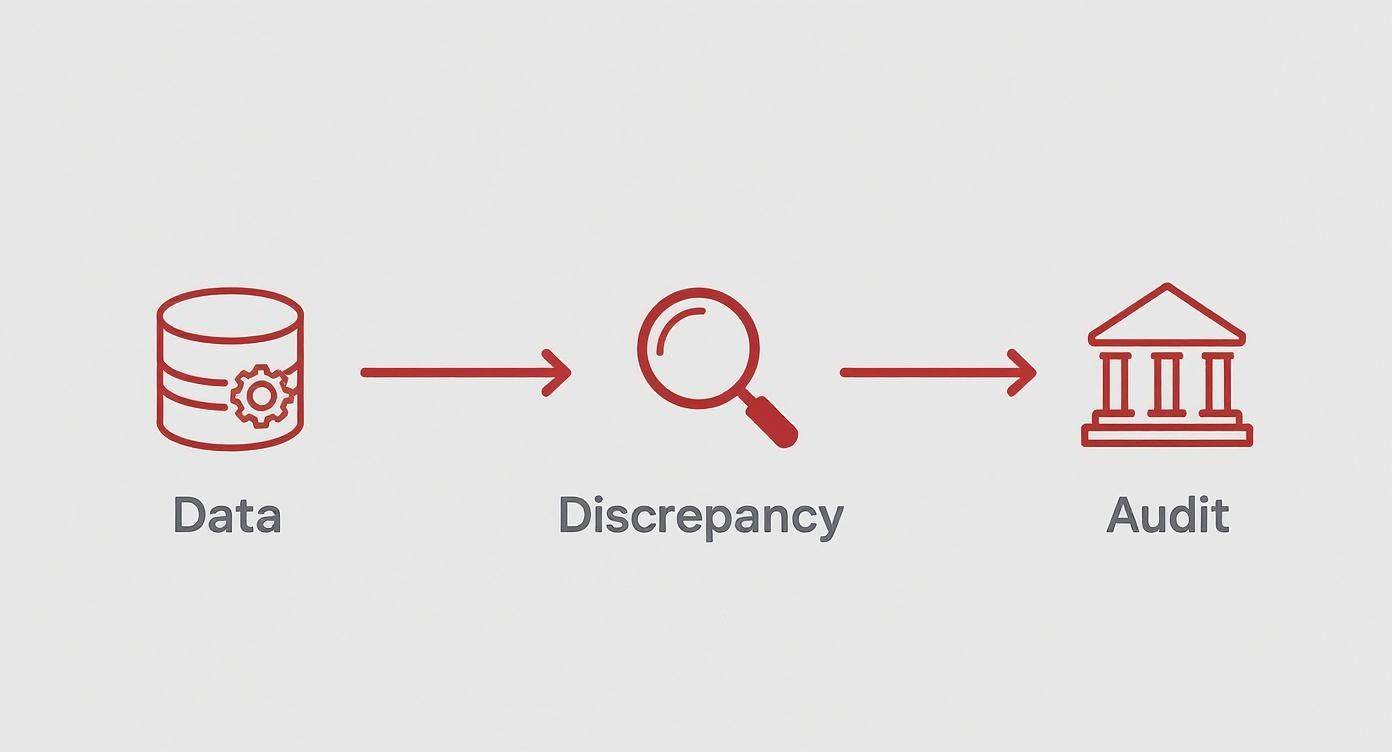
The key takeaway here? Audits rarely come out of the blue. They're almost always triggered by specific data that doesn’t quite add up.
Let's break down the journey you'll take, from that first letter to the final decision.
Stage 1: The Initial Notification
The process officially kicks off when you receive a formal letter or a phone call from your dedicated ATO case officer. This isn’t a vague warning; it's a specific document that clearly outlines the scope of the audit.
Your notification will typically detail:
- What is being audited: It could be your income tax returns, BAS statements, FBT returns, or superannuation guarantee obligations.
- The time period under review: The ATO will specify the exact financial years they are looking into.
- The initial information required: They’ll give you a list of documents they need to get the ball rolling.
Practical Example: A small graphic design business gets a letter stating the ATO is auditing their income tax and BAS for the 2022 and 2023 financial years. The letter asks for copies of all business bank statements, invoices for major asset purchases, and the general ledger for that period.
Stage 2: Information Gathering and Examination
This is the core of the ATO audit process. Your case officer will start requesting and digging into your records. Their power to ask for information is broad, granted under Division 353 of Schedule 1 to the Taxation Administration Act 1953. It’s your legal obligation to provide what they ask for within the given timeframes.
During this stage, the ATO will:
- Request Specific Documents: This could be anything from bank statements and receipts to contracts and logbooks. Expect follow-up questions for clarification.
- Conduct Interviews: The ATO might request a formal interview with you or your business partners. It’s crucial to prepare for this and seriously consider having your tax agent sitting beside you.
Think of this phase as the ATO piecing together a puzzle with your financial records. Your job is to provide the pieces they ask for, clearly and accurately.
Stage 3: The ATO Position Paper
After thoroughly reviewing everything you’ve sent, the ATO will form a preliminary view. If they’ve found areas of concern, they will issue an ATO Position Paper.
This document is your first real insight into the auditor's thinking. It spells out their findings, explains the facts and laws they are relying on, and details the proposed tax adjustments, penalties, and interest.
Crucially, the Position Paper isn’t the final word. It's a critical opportunity for you and your tax representative to understand the ATO's argument and prepare a detailed response. Being proactive here is essential. For more insights on safeguarding your finances, you might find our guide on how to protect yourself from tax audit and tax scams useful.
Stage 4: Your Response and Final Decision
You’ll be given a specific timeframe—usually 28 days—to formally respond to the Position Paper. This is your moment to correct any factual errors, provide extra evidence, or argue against the ATO’s interpretation of tax law.
Practical Example: The graphic design business's Position Paper disallows $15,000 in contractor payments, arguing they were actually employees. In response, the business provides signed contractor agreements and evidence showing the contractors worked for other clients, successfully proving they were legitimate business expenses.
After considering your response, the ATO makes its final decision. They’ll issue a Notice of Assessment or Amended Assessment, which officially finalises the audit. This notice will either confirm no changes are needed or detail the adjusted tax payable, including any penalties and interest.
Understanding these steps demystifies the audit, transforming it from a source of anxiety into a process you can manage effectively.
Understanding Your Rights and Obligations
When you’re facing an ATO audit, it's easy to feel like the balance of power is tipped against you. But the process is governed by a strict legal framework designed to be fair. While you have clear obligations, you also have fundamental rights protected by law.
Getting your head around this dynamic is crucial. It’s not just about what the ATO can ask of you; it’s also about what you can expect from them. This balance ensures the tax system’s integrity while respecting you as a taxpayer.
Your Obligations During an Audit
First, your primary obligation is to cooperate. This isn’t optional; it’s a legal requirement. Ignoring requests will only lead to significant penalties and a much tougher audit experience.
Your key responsibilities boil down to a few core duties:
- Providing Timely Access: You must give the ATO auditor reasonable access to your records and documents. That means responding to information requests within the specified deadlines.
- Answering Truthfully: You are legally required to answer questions honestly. Providing false or misleading information is a serious offence.
- Maintaining Records: Australian law requires you to keep financial records for at least five years. You need to be able to produce these records to back up your claims.
Failing to meet these obligations can result in severe penalties for non-compliance, so taking your duties seriously is non-negotiable.
Your Rights Under the Taxpayers' Charter
Just as you have obligations, the ATO is bound by its own code of conduct: the Taxpayers' Charter. This isn't just a fluffy list of suggestions; it details the standards of service and treatment you are entitled to receive. Think of it as your shield during an audit.
The Taxpayers' Charter sets out the relationship between the ATO and the community. It outlines your rights and obligations, as well as what you can expect when you deal with the tax office. Knowing these rights empowers you to ensure you are treated fairly.
So, let's look at what these protections actually mean for you in practice.
Key Protections in Action
Your rights aren't just theoretical; they have real-world applications that can make a huge difference.
Here are your core rights and how they play out:
- Right to Professionalism: You have the right to be treated with professional courtesy. ATO officers are expected to act with integrity. If you feel an auditor is being unreasonable or aggressive, you have every right to raise this concern with their manager.
- Right to Representation: You don't have to face an audit alone. You have an absolute right to be represented by a qualified professional, like a registered tax agent. Your representative can handle all communication with the ATO for you.
- Right to Appeal: If you disagree with the final audit decision, the fight isn't necessarily over. You have a legal right to object to the assessment. This is a formal process where you can challenge the ATO’s findings. For a deep dive into this, you can check out the ATO's official guidance on how to dispute or object to an ATO decision.
Practical Example: Imagine the ATO requests "all business communications for the last five years." This is an incredibly broad, almost impossible request. Exercising your rights, your tax agent could respond by asking the ATO to clarify the specific information they need, narrowing the scope to what is reasonably necessary for the audit.
Actionable Tip: Feeling overwhelmed? Contact our experienced tax accountants in Ashfield or Belrose Northern Beaches to make sure your rights are protected every step of the way.
How to Prepare for Your ATO Audit
Getting that notice from the ATO can make your stomach drop. But panicking won't help. What will is taking a deep breath and getting organised. This is your chance to shift from reactive fear to a managed, controlled process. Think of it as building your fortress, brick by brick, so you can face the ATO with confidence.

The moment that letter arrives is your cue to start gathering your records. A well-organised, complete file isn't just helpful—it's the very foundation of a solid audit defence. It sends a clear message of diligence to the auditor, which often leads to a faster, smoother resolution.
Collate Your Essential Documents
First things first: start pulling together every relevant financial record for the period the ATO has specified. Get everything into one place now, neatly organised by financial year and category.
Here’s a quick checklist of what you should be looking for:
- Bank and Credit Card Statements: Both business and, if relevant, personal accounts.
- Invoices and Receipts: These are your proof for every income and expense claim.
- Logbooks: A detailed, ATO-compliant vehicle logbook is non-negotiable if you've claimed significant car expenses.
- Business Records: Your general ledger, profit and loss statements, balance sheets, and BAS lodgements.
- Asset Registers and Depreciation Schedules: Proof of purchase and calculations for any depreciated assets.
- Employee Records: Records for wages, superannuation payments, and PAYG withholding.
An organised taxpayer is a credible taxpayer.
Engage a Professional Early
Going it alone in an audit by ato is a massive risk. Bringing a registered tax agent on board right from the start gives you an immediate strategic advantage. They become a critical buffer between you and the ATO.
A tax expert understands the nuances of tax law that most people miss. They know what auditors look for, how to frame your arguments, and can navigate the entire complex process on your behalf. That kind of professional guidance is simply invaluable.
To get a head start on financial diligence, check out our guide on becoming an audit-ready business. And for broader insights, resources offering simplified and comprehensive tax advice for small businesses can be a huge help.
Master Your Communication Strategy
How you talk to the ATO matters. A lot. Every single interaction needs to be professional, documented, and to the point.
Stick to these golden rules for communication:
- Get It in Writing: Follow up phone calls with an email summarising what was discussed. A paper trail is your best friend.
- Answer Only What's Asked: Do not offer up extra information or speculate. Stick to the facts and provide only the documents requested.
- Be Honest and On Time: Always be truthful and respect the deadlines. If you need more time, have your tax agent formally request an extension.
The audits the ATO conducts are highly targeted. This highlights why being prepared and efficient is so important; they are focused on making their efforts count, and you should be too.
Preparation is all about taking back control. By getting organised, calling in the experts, and managing your communication like a pro, you can walk into the audit process with your head held high.
Post-Audit: Understanding the Outcomes
So, the ATO has finished combing through your records. What happens now?
Once the examination wraps up, you’ll get an official notice detailing the outcome. This is the final decision, and it’s crucial to understand what it means for you and what your next steps should be.
Every audit ends in one of three ways.
The Three Possible Audit Outcomes
That final notice of assessment from the ATO will lay it all out.
No Changes to Your Assessment: The best-case scenario. The ATO agrees your original tax return was spot on. Your case is closed.
Amended Assessment with a Refund: Sometimes, an audit can work in your favour. If the ATO finds deductions you were entitled to but missed, they’ll issue a refund.
Amended Assessment with a Tax Debt: The most common result when an audit uncovers issues. You'll receive an amended assessment detailing the extra tax you owe, plus interest and potentially hefty penalties.
If you end up with a tax debt, it’s not just the original tax amount. The ATO will also tack on a Shortfall Interest Charge (SIC) and can impose penalties for everything from a lack of reasonable care to outright recklessness.
Penalties and Your Right to Object
The ATO can apply penalties ranging from 25% to 75% of the tax shortfall for false or misleading statements. These can sometimes be reduced if you’ve been cooperative.
But here’s the most important part: you don't have to just accept the ATO's decision. If you believe they've got it wrong, you have a legal right to challenge the outcome.
The first step is lodging a formal objection. You typically have a limited window to do this—either two or four years from the date of the assessment, as set out in the Taxation Administration Act 1953. Don't miss that deadline.
If your objection is knocked back, you can appeal to the Administrative Appeals Tribunal (AAT) or even the Federal Court. This is where having professional representation isn't just a good idea—it's essential.
Actionable Tip: If you’re staring at an unfavourable audit notice, get expert advice immediately. Contact our tax accountants in Ashfield or Belrose Northern Beaches to talk through your options and build your appeal strategy.
Common Questions About ATO Audits
Getting that letter from the tax office is enough to make anyone's stomach drop. Suddenly, a million questions pop into your head. Getting clear, straightforward answers is the first step to feeling in control again.
Let's tackle the most common questions we hear about an ATO audit.
How Many Years Back Can the ATO Audit?
For most individuals and small businesses, the ATO’s standard review period is two years from when your notice of assessment was issued. For larger or more complex businesses, that window extends to four years.
But here's the crucial exception: if the ATO suspects fraud or tax evasion, all bets are off. In cases where they believe there's been a deliberate attempt to mislead them, there is no time limit on how far back they can investigate. The Taxation Administration Act 1953 gives them sweeping powers to chase down serious non-compliance.
Should I Hire a Lawyer or a Tax Agent for an Audit?
Engaging a registered tax agent right from the start is a strategic move. We speak the ATO's language, understand the complex rules, and can manage all communication for you.
A tax lawyer becomes essential if the audit involves tricky legal arguments, the potential for prosecution, or if you need to challenge an ATO decision in court. For the vast majority of audits, though, an experienced tax agent is your best first line of defence.
What if I Can't Find My Old Records?
It happens. While original documents are the gold standard, losing a few records isn't a complete disaster.
You can often prove your expenses in other ways. Bank or credit card statements showing the transactions are a great start, especially when paired with a clear explanation of what the expense was for. The key is to be upfront. Don't just say "I lost it." Work with your accountant to pull together as much alternative evidence as you can.
Can I Set Up a Payment Plan if I Owe Money?
Yes, absolutely. If the audit finds you have a tax debt you can't pay all at once, the ATO is usually very willing to set up a payment arrangement.
You can apply to pay the debt off in manageable instalments. The most important thing is to act fast. As soon as you receive the notice of amended assessment, contact the ATO (or have your tax agent do it) to get a plan in place. Ignoring the bill will only make things worse.
Navigating an audit by the ATO takes a steady hand and deep expertise. At EndureGo Tax, we provide the professional guidance you need to protect your rights and work towards the best possible outcome.
Book a consultation with our expert tax accountants in Ashfield or Belrose Northern Beaches today.
